
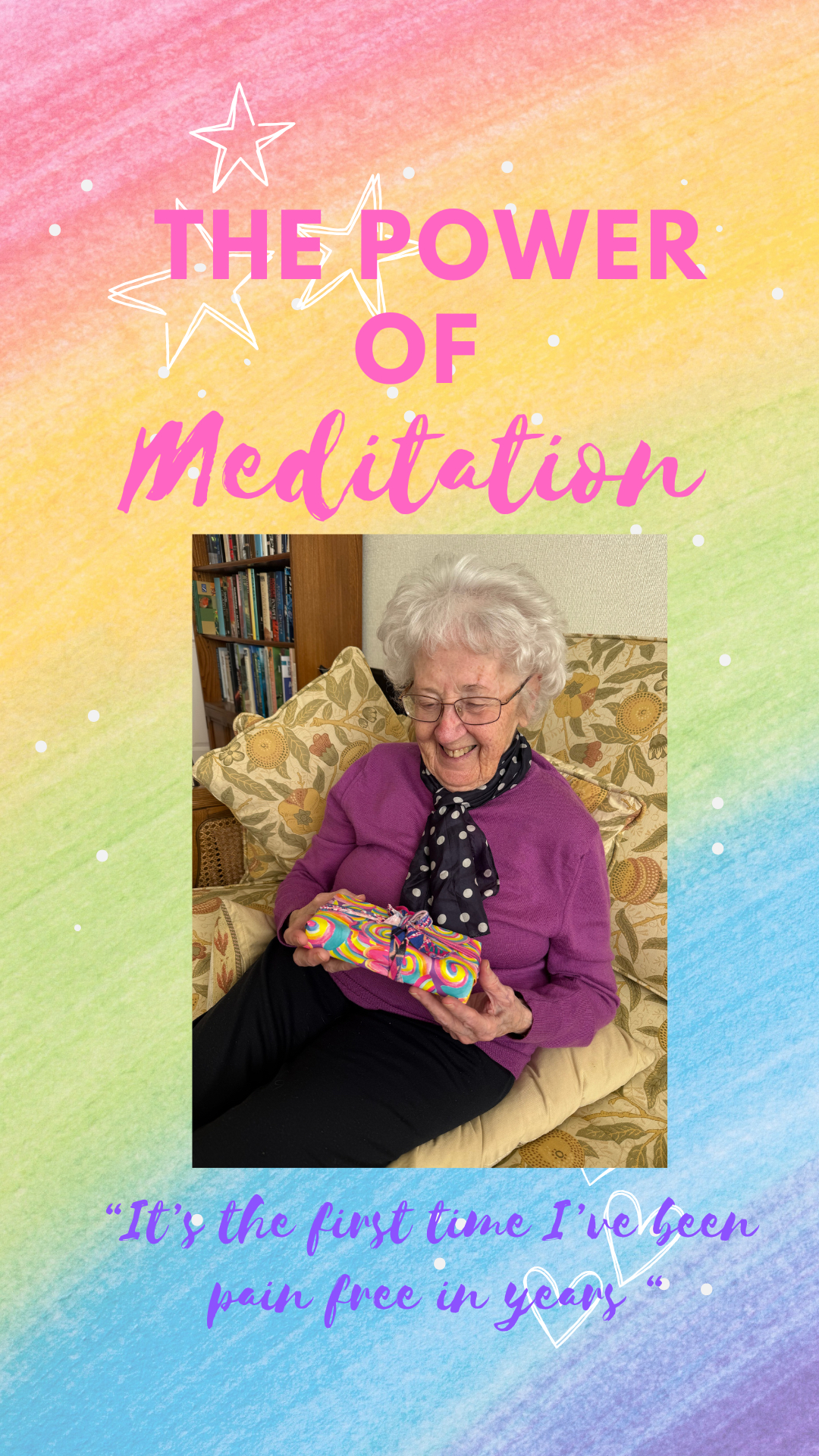
PGPA’s Occupational Therapist Michelle Agus supported her patient Anne in finding a way to manage her pain in a deeply meaningful and personal manner.
Background: Anne, 89, had been suffering from chronic pain for decades. Over the years, she had tried everything from medications, injections, acupuncture, and other medical treatments—but nothing seemed to provide lasting relief. The persistent pain had significantly impacted her daily life, leaving her feeling hopeless and defeated. Despite seeking various treatments, her quality of life remained poor, and she continued to search for a solution.
Therapeutic Intervention: After exploring many traditional methods with no success, we decided to try an alternative approach—meditation. Specifically, a short 6-minute guided meditation designed to help her manage pain and reduce stress. This technique was simple yet powerful, and it was something Anne could practice daily in the comfort of her home.
The Moment of Transformation: After Anne completed her first session of the meditation, I received an emotional response from her. With tears in her eyes, she said, “It’s the first time I have been pain-free in decades.” This was a deeply moving moment for both of us. For the first time in many years, Anne experienced true relief from the chronic pain that had overshadowed her life.
Personalising the Solution: Initially, I had planned to send her the meditation audio via WhatsApp, but Anne did not have a compatible phone. So, I recorded the meditation again on a Dictaphone, carefully wrapped it in a little box with a bow, and personally delivered it to her. This thoughtful gesture, though small, was something that Anne cherished deeply. It became her own personal tool for managing pain, providing her with the power to take control of her healing journey.
Empowerment Through Daily Practice: When I followed up with Anne, she shared that the relaxation tape had “taken her to another world” and was now an essential part of her daily routine. She was using it consistently for pain management, and it was providing her with significant relief. This was a moment of empowerment for Anne, as she had found a method that worked for her—a method she could continue to use at her own pace, in her own space.
The Outcome: Anne’s experience underscores the importance of holistic, personalised approaches to chronic pain management. While traditional methods like medication and acupuncture can be helpful, alternative practices like meditation offer a safe, effective, and empowering way to address pain. This case is a testament to the incredible power of mindfulness and the profound impact it can have on a patient’s quality of life.
Conclusion: Anne’s case is a beautiful example of how occupational therapy can help individuals with chronic pain find their own path to healing. By introducing a simple yet effective intervention—guided meditation—I was able to support Anne in finding a way to manage her pain in a deeply meaningful and personal manner.