
This World Autism Acceptance Month, it’s important to spread awareness and increase understanding about autism.
As highlighted by the National Autistic Society, autism is a lifelong neurodivergence that influences how people experience and interact with the world. Autistic people can have unique ways of thinking, feeling, and communicating.
These differences may include:
- Socialising: Autistic individuals may find social interactions confusing or tiring, and they may struggle to navigate social norms or conversations.
- Sensory sensitivities: They might feel overwhelmed in loud, busy environments due to heightened sensitivity to sounds, lights, or textures.
- Intense interests: Many autistic people develop deep interests or passions in specific topics.
- Routine and order: There may be a preference for structured routines and predictability.
- Repetitive behaviors: Repeated movements or actions may be used to calm themselves or express joy.
These characteristics, though common among many autistic individuals, can vary greatly from person to person. The spectrum of autism is not a simple line from “more” to “less”; instead, each individual has a distinct combination of traits, strengths, and challenges. The spectrum can look very different for each person, and it can shift depending on the person’s environment or whether they are masking their discomfort.
It’s important to note that autism isn’t a learning disability or a mental health condition, though many autistic people may also experience a learning disability or mental health challenges. In fact, people of all genders, ages, and ethnicities can be autistic, though those from marginalised groups may face additional barriers in receiving a proper diagnosis. This highlights the need for more research and awareness to understand the full diversity of the autistic community.
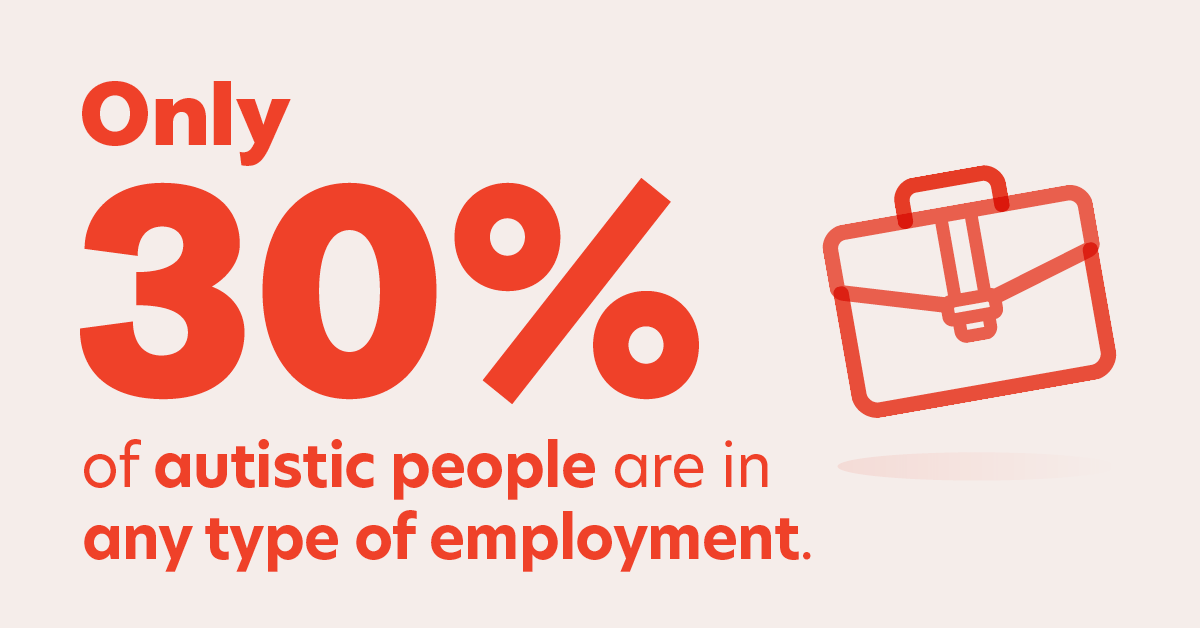
Shockingly, only 30% of autistic people are in any type of employment.
Currently, more than one in 100 people are autistic, with at least 700,000 autistic adults and children in the UK alone. However, these numbers may be even higher, as many people may not have received an official diagnosis.
Autism acceptance is about understanding and supporting the unique experiences of autistic individuals. Let’s continue to raise awareness, embrace neurodiversity, and create inclusive environments for everyone.
For more information you can visit the National Autistic Society Website. Below are videos on how to ‘Show Up’ for autistic people and the ways in which people can support autistic people and their families at work, at school and in public places.