

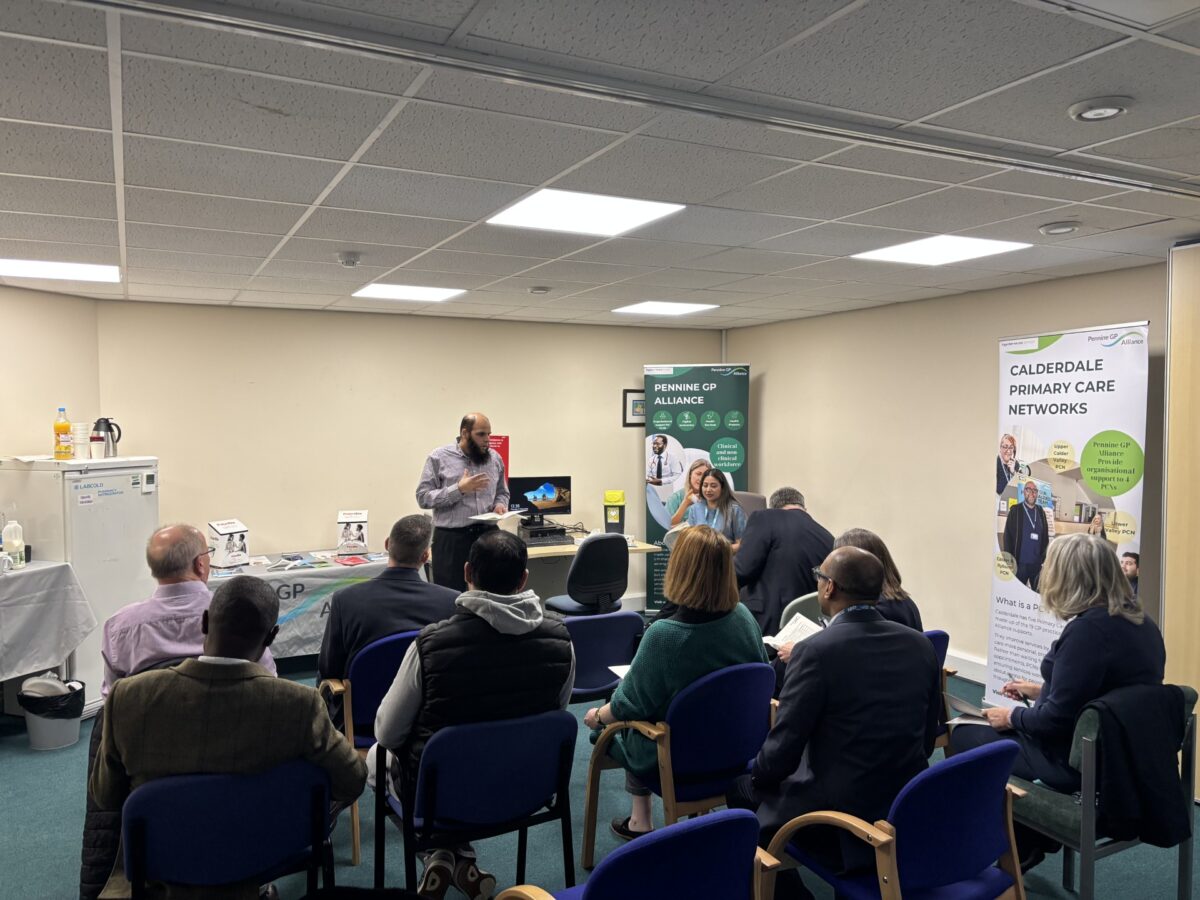
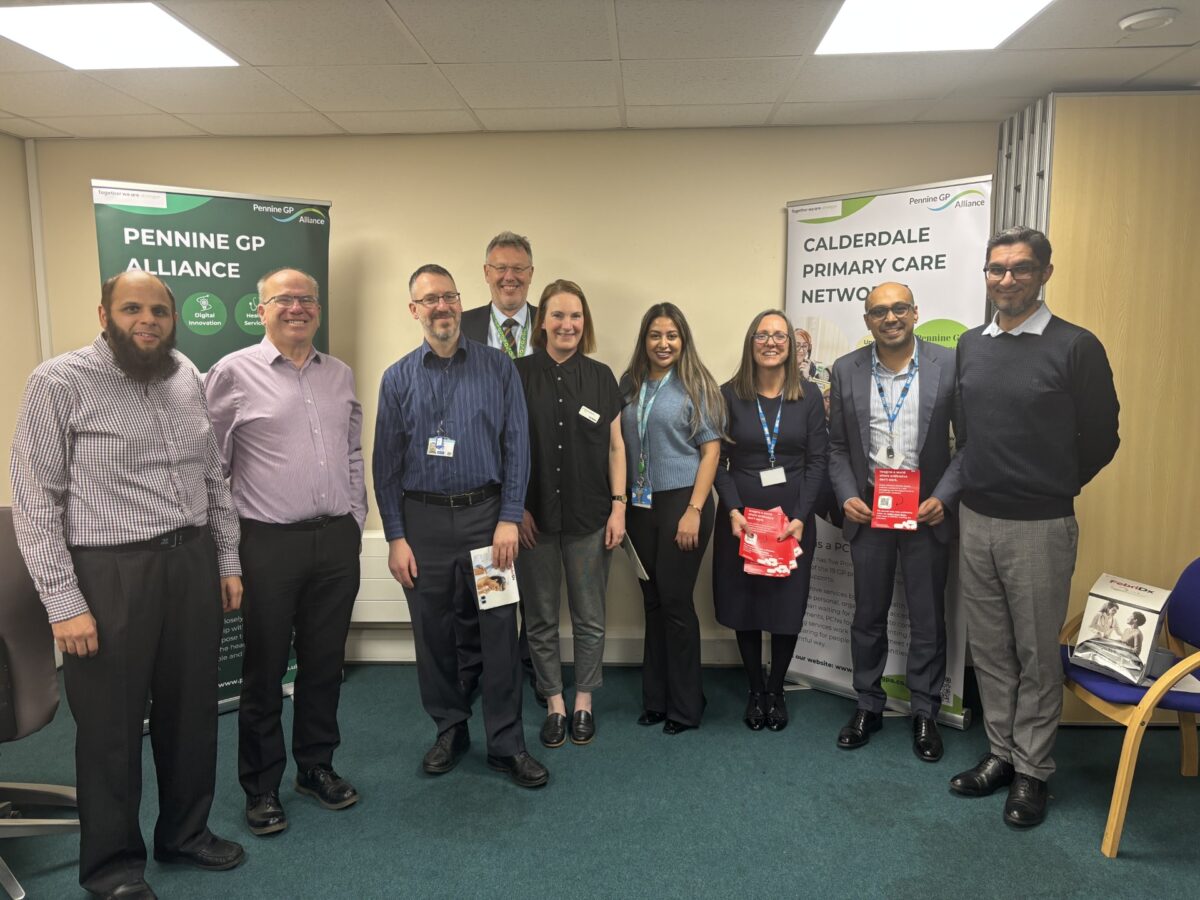
Senior leaders from NHS England visited Calderdale this week to see first-hand how Pennine GP Alliance’s (PGPA) Acute Respiratory Infection (ARI) Hubs are supporting adults, children, GP practices and the wider healthcare system during the busy winter period.
The visit took place at the ARI Hub at Horne Street Surgery in Halifax, which remained open as normal throughout the day with no disruption to patient appointments.
What Are ARI Hubs?
ARI Hubs provide rapid, same-day appointments for patients with respiratory symptoms such as cough, fever, wheezing, chestiness or shortness of breath. They offer quick assessments, diagnostic tests and treatment, helping people access the right care sooner and reducing unnecessary hospital attendances or admissions.
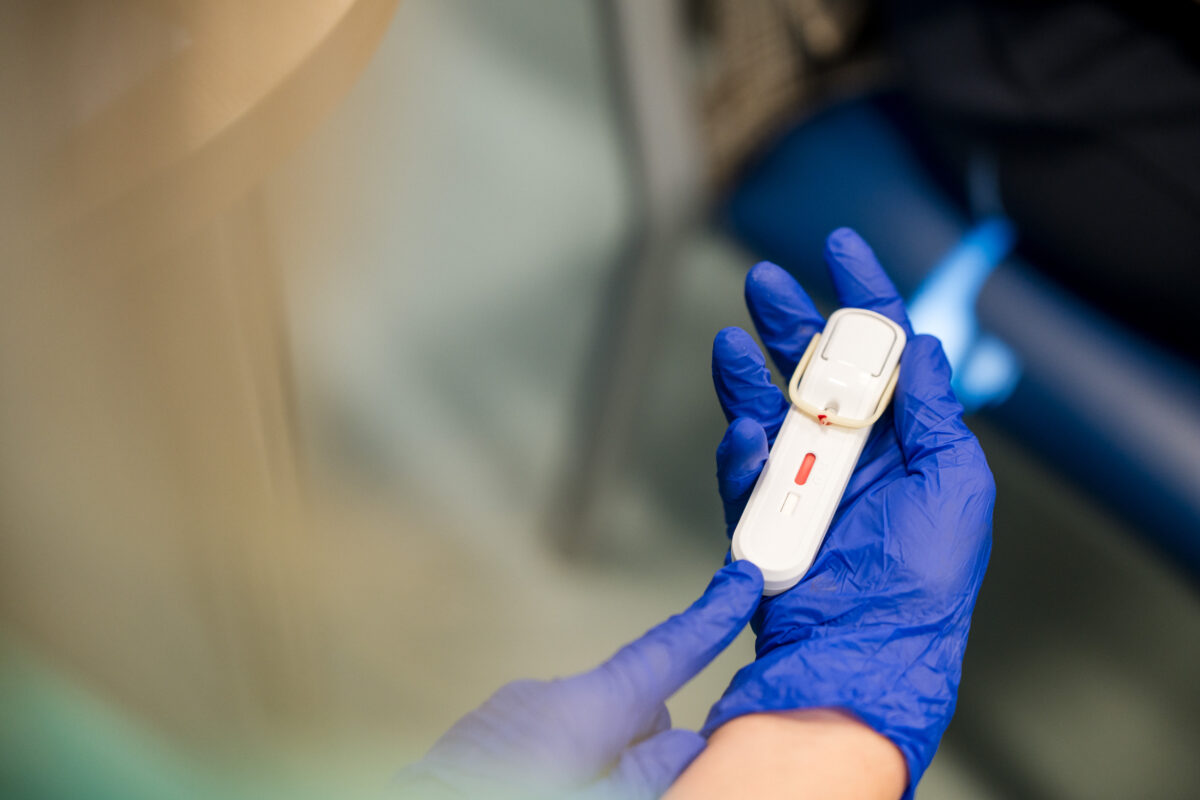
A key innovation is the use of respiratory Point of Care Testing (POCT). This simple finger-prick test provides results within minutes to show whether an infection is viral or bacterial, supporting faster, safer treatment decisions and helping avoid unnecessary antibiotics.
In Calderdale, PGPA leads on the implementation of respiratory POCT, including the distribution and management of FebriDx kits for community teams and all GP practices – a programme recognised nationally through the Health Service Journal Awards.


A Model Recognised for Impact and Innovation
Calderdale’s ARI Hubs are already recognised for improving patient care, reducing pressure on GP practices and A&E, and tackling antimicrobial resistance (AMR).
During the visit, NHS England met with:
- PGPA staff including the programme lead and hub clinicians
- West Yorkshire Integrated Care Board (ICB) commissioners
- Patients who have used the service
They heard how the ARI model has:
- Been developed and mobilised across all five Primary Care Networks
- Delivered positive outcomes demonstrated through patient data and clinical indicators
- Enabled the roll-out of POCT across hubs, GP practices and community teams, including Urgent Community Response, the Acute Home Visiting Service, the Care Homes Team and Calderdale respiratory nurses
- Supported neighbourhood-based care through effective workforce models
- Strengthened links with long-term condition pathways such as asthma and COPD
- Helped optimise antibiotic prescribing
- Integrated staffing and recruitment with wider NHS services
West Yorkshire ICB representatives shared insights from commissioning the hubs, emphasising their impact on system pressures and winter resilience.
Hearing Directly From Patients
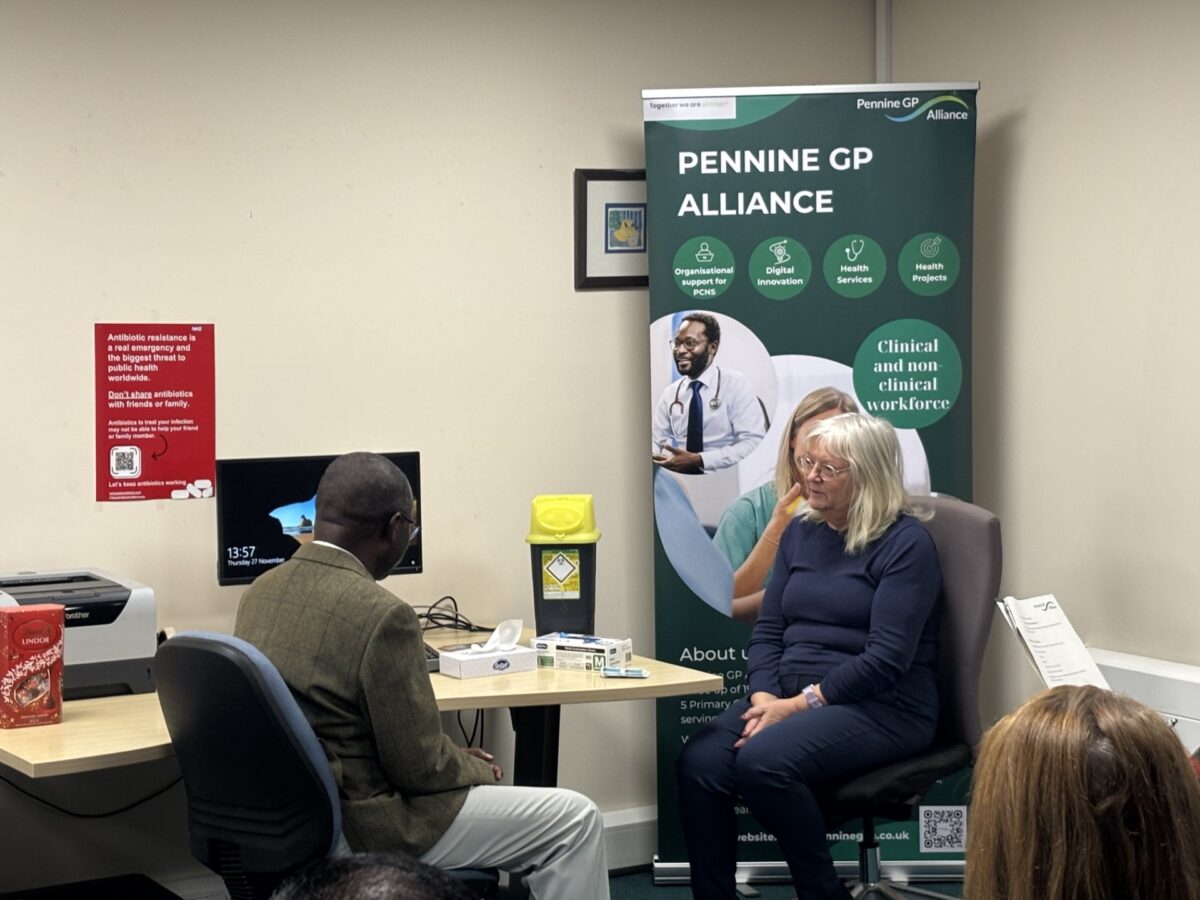
A highlight of the visit was hearing from patients who recently attended an ARI Hub. They described how POCT reassured them that their illness was viral, helping them avoid unnecessary antibiotics and receive timely, appropriate treatment.
A GP working in the hub also shared how the ARI model and POCT support confident clinical decision-making, improved workflow and fewer hospital visits and admissions.
A Meaningful Visit During Antimicrobial Resistance Awareness Week
The visit followed World Antimicrobial Resistance Awareness Week (18–24 November 2025), which highlights the global need to preserve antibiotics.
Calderdale’s ARI and POCT programme demonstrates how local primary care teams can play a significant role in tackling AMR – supporting safer prescribing, reducing avoidable hospital use and keeping care close to home.
Supporting NHS 10 Year Plan Priorities
The ARI Hubs and POCT model continue to support key aims of the NHS 10 Year Plan, including faster, safer neighbourhood-based care, reduced hospital attendances, improved antimicrobial stewardship and better experiences for patients and clinicians.
Asif Yaseen, PGPA Medical Director, said:
“Our ARI hubs mean patients can get fast, expert care close to home. POCT has been a vital addition, giving clinicians immediate information and offering patients reassurance at a time when respiratory illness is common. We’re delighted that our local approach is now of national interest.”
Muz Fazlee, Senior Medicines Optimisation Pharmacist, NHS West Yorkshire Integrated Care Board in Calderdale said:
“The ARI hubs are an excellent example of how integrated working, data-driven improvement, and strong clinical leadership can make a real difference. Rapid assessment and POCT strengthen our ability to reduce unnecessary antibiotic use while ensuring patients receive timely, appropriate care.”
Liz Spice, Head of Primary Care Transformation and regional ARI hub lead for NHS England, North East and Yorkshire, said:
“Our network of 80 ARI hubs across the North East and Yorkshire region are an essential part of the service we offer to our patients throughout the winter period when respiratory illnesses surge during the colder months.
“In Calderdale this innovative testing is enabling clinical teams to swiftly distinguish between viral or bacterial respiratory illnesses in the community, avoiding unnecessary hospital admissions as well as reducing antibiotic resistance.”
The visit provided NHS England with a detailed, practical view of how Calderdale’s ARI model operates in practice – its design, challenges, and successes – offering learning to support national improvement across primary and urgent care. It also celebrated Calderdale’s continued commitment to neighbourhood-based, patient-focused care.
Find out more about PGPA’s Acute Respiratory Hubs here.