
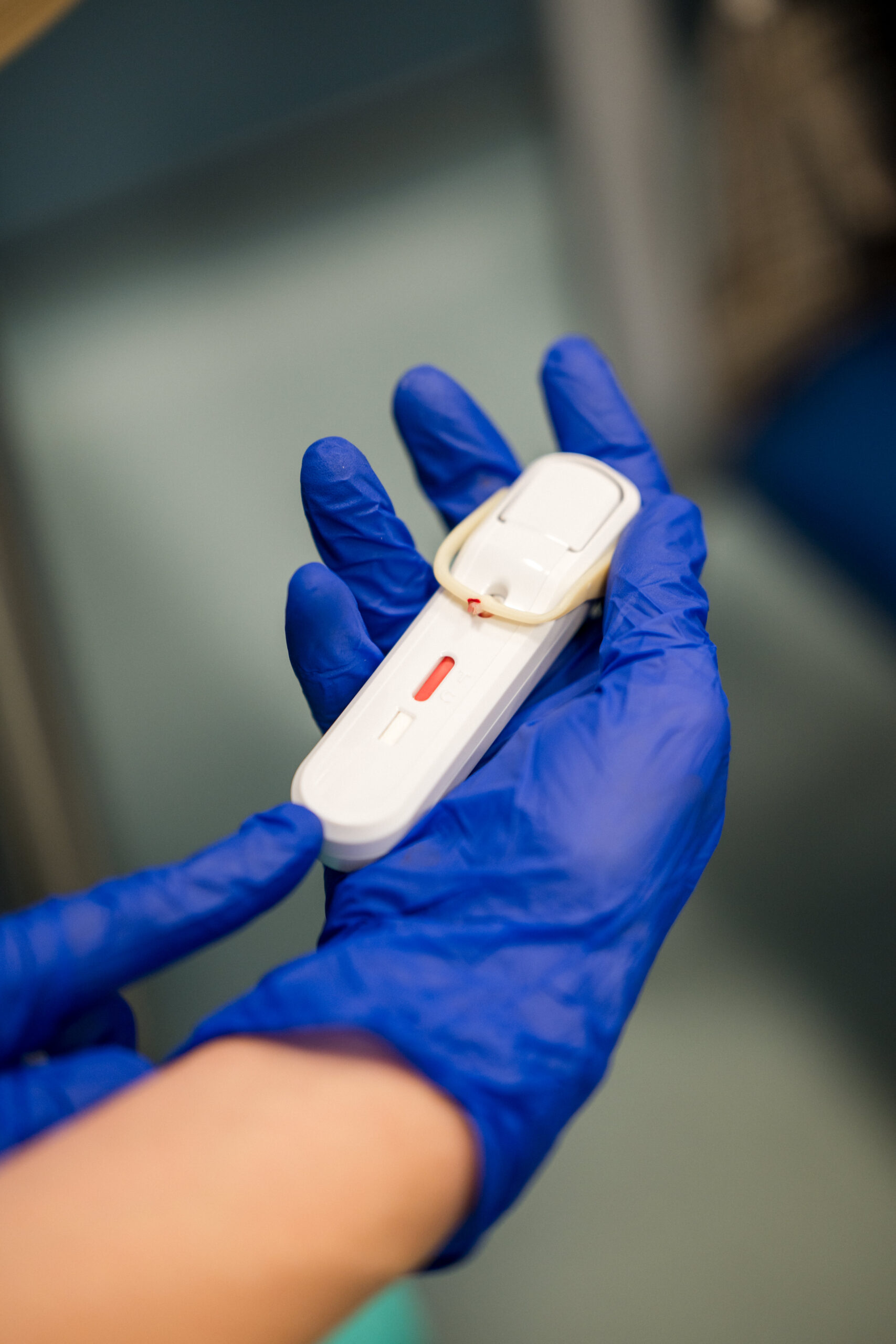
As we prepare to relaunch our Acute Respiratory Infection (ARI) Hubs for the winter ahead, we’re taking a moment to reflect on the impact of Point-of-Care Testing (POCT) throughout last winter. From supporting clinicians to make faster, more confident decisions to helping reduce unnecessary antibiotic prescribing, POCT played an important role in delivering safer, more effective respiratory care for people across Calderdale.
Winter 2025-26 marked a defining moment for the Point-of-Care Testing (POCT) programme in Calderdale, as the Acute Respiratory Infection (ARI) hubs completed their busiest and most impactful season since the model was introduced in October 2023. Delivered by Pennine GP Alliance in partnership with local primary care, community and urgent care services, the programme is now firmly embedded as a core part of winter respiratory care across the system.
This most recent winter placed extraordinary demand on services, with ARI hubs operating at full capacity across Calderdale’s primary care networks and managing thousands of patients presenting with acute respiratory symptoms. At a time when winter pressures traditionally drive uncertainty, increased antibiotic prescribing, and avoidable escalation to urgent and emergency care, POCT provided a consistent and reliable way to support clinical decision-making in real time. The ability to differentiate viral from bacterial infection during the consultation proved particularly valuable during peak respiratory surges, when clinical uncertainty is often at its highest and time pressures are greatest.
Throughout winter, POCT was used extensively within ARI hub assessments and was shown to influence clinical decision-making in nearly half of all consultations where it was applied. Clinicians consistently reported that the test provided an additional layer of confidence, particularly when deciding whether antibiotics were necessary or could safely be avoided. This was especially important during high-pressure winter clinics, where respiratory presentations were frequent, symptoms often overlapping, and patient expectations for antibiotics sometimes difficult to manage.

The impact on prescribing behaviour this winter was significant and sustained. Building on earlier reductions seen since implementation, antibiotic prescribing continued to fall across ARI hub pathways, reinforcing the role of POCT in supporting antimicrobial stewardship. Rather than relying on symptom-based prescribing, clinicians were able to use objective test results to support conversations with patients and make more targeted treatment decisions. This shift has been central to reducing unnecessary antibiotic use, while still ensuring that patients who genuinely require treatment are identified and managed appropriately.
At a system level, the benefits extended well beyond prescribing. The ARI hub model, supported by POCT, continued to reduce pressure on general practice and urgent care services by enabling more patients to be managed safely in the community. Clinicians reported fewer re-attendances and reduced need for escalation to hospital services, particularly for respiratory infections that might previously have generated precautionary referrals. This contributed to improved patient flow across the system during the most demanding winter weeks, helping to maintain resilience across primary and urgent care pathways.
Patient experience remained a consistent strength of the programme throughout winter 2025–26. Feedback collected across more than 600 consultations where POCT was used showed that 96% of patients would recommend the service. Many patients described feeling reassured by receiving a rapid and clear explanation of their illness, particularly when antibiotics were not prescribed. This reassurance was an important outcome in its own right, helping to shift expectations around respiratory infections and supporting better understanding of when antibiotics are and are not needed.
Clinicians echoed this positive experience, describing increased confidence in decision-making and improved quality of conversations with patients. POCT was frequently highlighted as a tool that reduced uncertainty, supported safer prescribing, and made consultations more structured and efficient, particularly during periods of peak winter pressure. Importantly, it also helped reinforce antimicrobial stewardship principles in everyday practice, embedding evidence-based prescribing more firmly into routine care.
A particularly notable outcome from winter 2025–26 was the continued reduction in antibiotic prescribing compared with pre-implementation baselines. Prior to the introduction of POCT, antibiotic prescribing rates in respiratory presentations through hub pathways were significantly higher. Since implementation, and sustained through this winter, prescribing has reduced, with pathway-wide reductions from 54% to 34%. At individual practice level, earlier evaluation sites demonstrated even more dramatic change, including reductions from 62% to 8% following adoption of POCT.
As the ARI hubs closed in April 2026 following a successful winter season, early evaluation confirms that POCT is now fully embedded within Calderdale’s respiratory care model. What began as a targeted intervention in 2023 has evolved into a system-wide approach to managing acute respiratory infections, spanning ARI hubs, GP practices, community services and urgent care settings. The scale of adoption reflects not only clinical effectiveness, but also strong alignment with workforce needs, patient expectations and system priorities.
The winter 2025–26 season therefore represents a clear milestone. It demonstrated that POCT is not simply an innovation within individual consultations, but a meaningful system enabler – supporting safer prescribing, reducing avoidable demand on urgent care, and improving patient experience at scale. As planning now turns to winter 2026–27, the evidence from this year provides a strong foundation for further refinement and expansion of the model, ensuring that the benefits seen this winter can be sustained and built upon in the years ahead.

As Dr Asif, Medical Director at Pennine GP Alliance, reflected on the impact of the programme:
“Point of care testing (POCT)has fundamentally changed the way we approach acute respiratory infections in Calderdale. It has given clinicians the confidence to make more informed, evidence-based decisions in real time, even at the height of winter pressure, and has helped shift both clinical practice and patient expectations in a really meaningful way.”